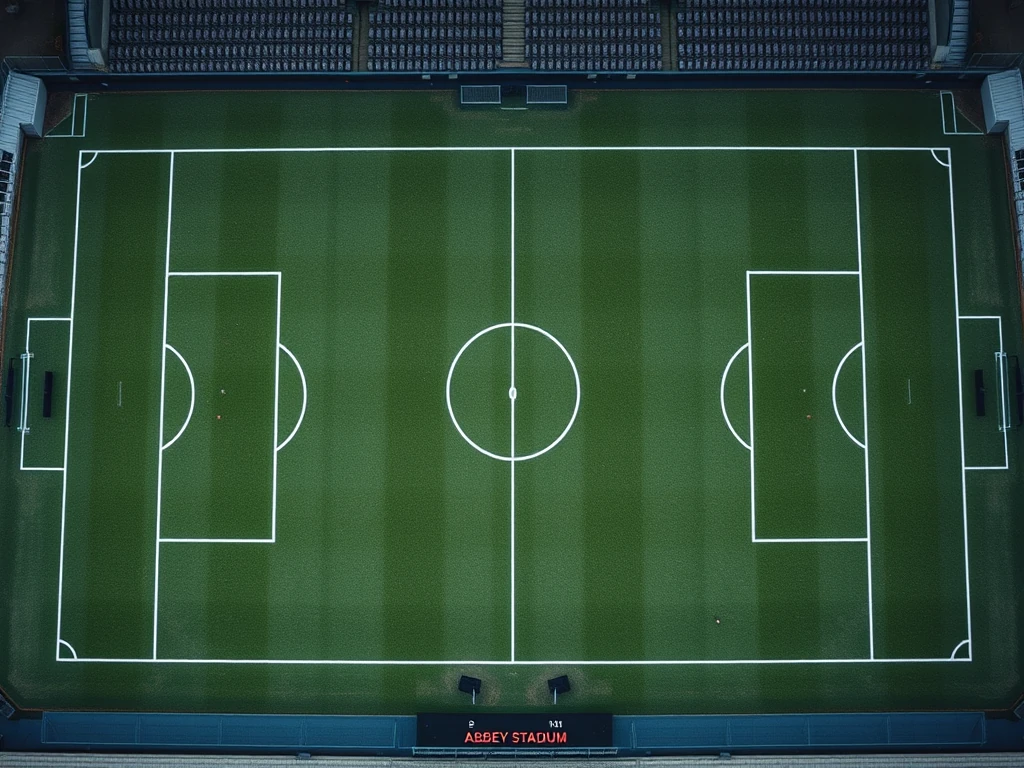

Steady rain blanketed the Abbey Stadium as Cambridge United lined up for their latest fixture, a reminder of the often-unforgiving weather in England. From the outset, it was clear how manager Mark Bonner had crafted a tactical framework designed not only for stability but also for efficiency. The U's approach this season has focused heavily on fluid transitions and maintaining positional awareness.
Defensively, Cambridge United has adopted a compact shape, allowing them to congest the midfield and stifle opponents' build-up play. The full-backs play a crucial role in this system, often tucking in to form a five-man defense during transition moments. This solid foundation has resulted in a noticeable improvement in clean sheets, now totaling three in the last four matches.
Offensively, the team's strategy revolves around quick ball movement, aiming to exploit spaces left by opposing defenses. J. Brophy's role as a dynamic attacker adds an element of unpredictability, while L. Appéré's pace creates problems on the flanks. As the season progresses, the chemistry between these players is becoming increasingly important, allowing Cambridge to counter-attack with speed and precision.
Mark Bonner's adaptability has also been evident in his willingness to change formations based on the opponent. Whether deploying a traditional 4-4-2 or opting for a slightly altered 4-2-3-1, the flexibility has allowed Cambridge to remain competitive across varying game states. This tactical awareness could be vital as the club ramps up efforts to close the gap on play-off positions in League Two.
With fixture congestion approaching, the ability to rotate the squad while maintaining tactical identity will be paramount. As frustrating as it can be to manage fatigue, Bonner's strategies have the potential to guide Cambridge United towards a strong finish this season.