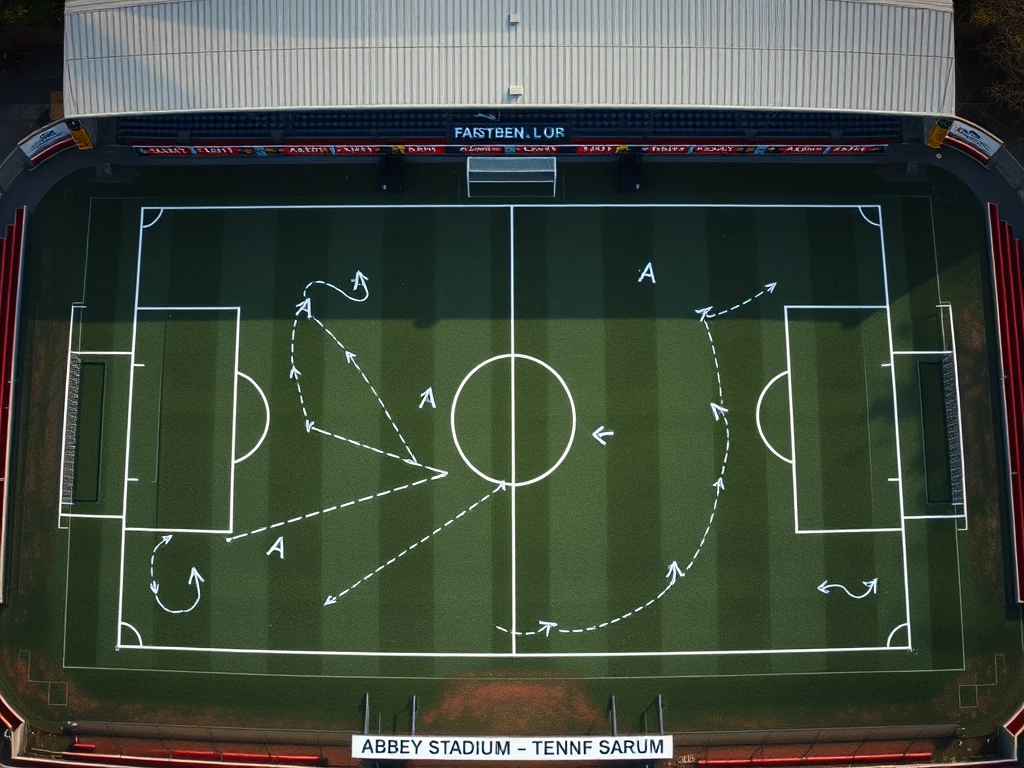
"Football is a game of inches," said Cambridge United's tactician last week, reflecting on the challenges faced in recent fixtures. With the U's currently enduring a rough patch, a closer examination of their tactical setup reveals interesting insights into their formation and player roles.
Currently utilizing a 4-2-3-1 formation, Cambridge United aims to maintain a solid defensive base while providing support for the lone striker. The double pivot in midfield, supported by D. Ball and J. Brophy, allows the team both defensive cover and transitional play. This configuration helps in keeping opponents at bay, especially when high pressing is deployed.
One key challenge observed in recent matches has been the spacing between the lines. While the core midfield duo offers stability, the connection with the attacking front remains shaky. For instance, during the loss to Bradford City, the gaps left between defense and midfield were exploited continuously. Improving these links could turn matches around.
the energy from the wings remains vital; L. Appéré and J. Eastwood are tasked with stretching the pitch and providing width. Their performances can dictate how well the team transitions from defense to attack. As opponents adjust, it's crucial for Cambridge United to tweak their tactics.
The upcoming engagement against Colchester will serve as a test of their adaptability. If their formation can dynamically evolve based on the opposition's strategies, it might just spark a revival in their campaign as the season progresses.